













The post-apocalyptic horror series “28 Days Later” returns for its fourth installment to movie screens around the world. “28 Years Later: The Bone Temple” brings back superstar actor Ralph Fiennes, along with Jack O’Connell, Alfie Williams and Chi Lewis Parry. The film hit theaters in the United States on January 16, raking in 53.6 million dollars in the box office both domestically and internationally.
Fiennes returns to the screen as his strong-willed character, Dr. Ian Kelson. Throughout the movie Dr. Kelson works through his own story, building a memorial of bones dedicated to the dead. While adding to his temple, he encounters an alpha who he has named Samson. Played by Parry, Samson and Dr. Kelson start to build a relationship which is profound in and of itself, due to the infected being portrayed as ruthless savages that rip any breathing human to shreds. Samson continues to come back to Dr. Kelson to find escape from the pain that the infection sets on his nervous system and slowly he seems to find the beginnings of his humanity. Director Nia Costa forms a critical plot point; the Rage Virus can be treated.
But Dr. Kelson and Samson are not the only ones who are trying to survive the Rage Virus. Not far from The Bone Temple, O’Connell’s villain Sir Lord Jimmy Crystal is initiating Spike into his cult of “Jimmys”. The cult is based on Jimmy Savile, a former British TV personality, who post-death was revealed to be a prevalent predator, sexually abusing countless children and patients. It’s important to note that these crimes were not publicly acknowledged until 2011, whereas the movie takes place much before then. Spike, played by Williams must kill one of the previous Jimmys to survive and join the group, which he does to his own horror. Sir Lord Jimmy Crystal runs his small group of zealots who hunt down other survivors to sacrifice to the devil. The horrific torture that Crystal and his group of Jimmys inflict on others is its own entirely different sort of horror and gore. Clad in their bright tracksuits and matching blond wigs, the groups burn down an encampment, slaughters a family and sets a pregnant woman off into the unknown.
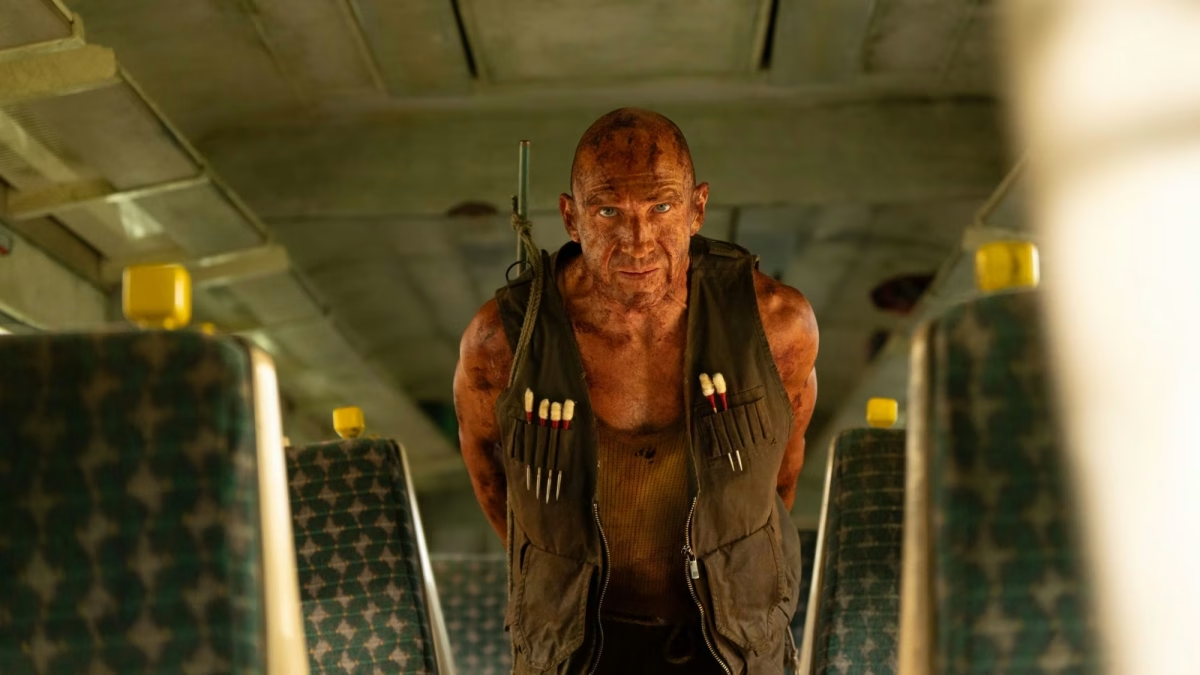
As the movie progresses the Jimmys find internal conflict when Spike lies about the woman escaping, which leads Sir Lord Jimmy Crystal to seek the devil. Finally, bridging the storylines between Dr. Kelson and the zealots. Crystal believes that Dr. Kelson is the devil as he walks around covered in iodine throughout his bone temple. Forcing Kelson to play the devil, Crystal has an agenda and it’s to fuel his drive for the rampage of sacrifice. In the lead up to the climax of the scene, Dr. Kelson fulfills his role until he learns of what Crystal’s actual intentions are, resulting in the devil proclaiming that Crystal, his son, must sacrifice himself. Sir Lord Jimmy Crystal finds his demise to Spike and a fellow Jimmy, whose real name is Kelly. To round off the scene Samson returns free of the virus to a dying Dr. Kelson, who he carries off into the dark.
“28 Years Later: The Bone Temple” drags to its end, but it’s not without its jaw-dropping ending. In a way, the cinematic universe feels split between the original movie “28 Days Later” starring Cillian Murphy and the three other movies. But Costa wraps it all up into a nice, neat ball for the audience. The final scene brings back Jim from the 2002 movie and a daughter he’d tacked on. Their entrance is at their cottage situated in the hills of the countryside and as they meander through daily tasks, they hear commotion outside. The last thing viewers see is Spike and Kelly running from the infected as Jim and his daughter decide to save them.
Costa forms a concise, intricate movie that captures social commentary, horror and action. Not to mention the filming techniques to make the movie embrace the gritty real-life scares that the infection rampages over the earth and its surviving humans.